

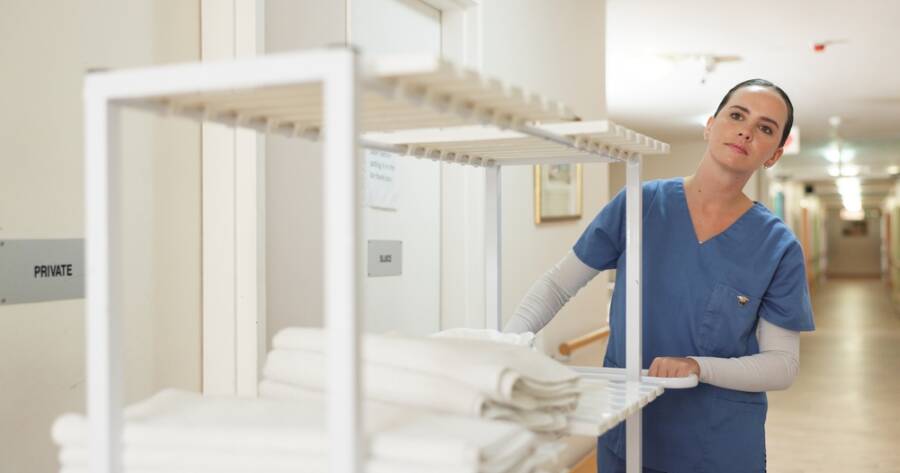
Inside every hospital, an intricate laundry operation works around the clock to keep patients protected and clinical environments clean. The way healthcare facilities handle, wash, and store textiles has a direct bearing on infection prevention and the overall standard of care.
Why Linen Management Matters in Healthcare Settings
Textiles used in healthcare environments are exposed to some of the most challenging biological contaminants found in any workplace. Soiled fabrics can harbor enormous quantities of microorganisms derived from blood, bodily fluids, skin cells, and other biological materials (source). Because of this, hospitals treat linen as a potential infection risk from the moment it leaves a patient’s bedside until it completes the laundering process and returns to storage.
Across the United States, healthcare facilities collectively launder billions of pounds of textiles every year, and existing containment strategies have proven effective at reducing the transmission of disease among both patients and staff (source). This scale alone underscores why hospital laundry operations cannot be treated as a routine housekeeping task—they represent a frontline component of patient safety infrastructure.
Proper Containment at the Point of Use
One of the most critical steps in the entire linen management process happens at the point of care, before soiled items ever reach a laundry facility. Contaminated textiles must be sealed in clearly identified, leak-proof containers right at the location where they became soiled, rather than being carried by hand through hallways or patient areas (source). Visible labeling, color-coded bags, or other standardized identification methods allow staff to recognize and handle these materials safely throughout the transport chain (source).
These containment protocols reduce the risk of secondary contamination in corridors, elevators, and shared spaces. When a healthcare worker transports soiled linens through an unsecured area without proper containment, the risk of spreading pathogens to otherwise clean environments increases significantly. Following a defined containment procedure protects not only the workers handling the laundry but also other patients and visitors throughout the facility.
The Structure of a Hospital Laundry Facility
Healthcare laundry facilities are physically designed to enforce a strict separation between soiled and clean materials. A laundry area is typically divided into a receiving zone for dirty items, operating under negative air pressure to prevent airborne contaminants from migrating outward, and a separate processing zone where washed items are handled (source). This architectural approach creates a flow-through system where soiled laundry enters from one side and clean laundry exits from the other, minimizing any chance of cross-contamination.
Staff working in the soiled receiving area follow specific personal protective equipment requirements and adhere to handling protocols that differ from those in the clean processing zone. This division of labor and space reflects a systematic understanding of how contamination spreads and how facility design can actively work against it.
Laundering Standards That Eliminate Pathogens
Achieving hygienically clean textiles requires more than just running a wash cycle. The effectiveness of the laundering process depends on a combination of factors: water temperature, the duration of the wash, mechanical agitation, water chemistry including pH and hardness levels, how heavily soiled the load is, and the overall volume of laundry being processed (source). When these variables are optimized together, the result is a thorough reduction of microbial load.
Recommended laundering practices call for hot water maintained between 70 and 80 degrees Celsius for a minimum of ten minutes, paired with an approved laundry detergent; additional chemical disinfectants are generally not required when soiling remains at manageable levels (source). Meeting these thermal thresholds is what allows healthcare laundry to achieve the level of cleanliness that patient safety demands.
Storage and Transport of Clean Linens
Once textiles have been laundered and processed, protecting them from recontamination becomes the next priority. Clean linens must be sorted, packaged, and transported in a manner that shields them from dust, debris, and proximity to soiled items. Dedicated transport carts used for clean linens require cleaning at least once per day, and storage conditions must prevent any contact with contaminated materials or environments (source).
Even a single lapse in clean linen storage practices can undermine all the work that went into laundering those textiles properly. Hospitals maintain strict protocols for where clean linens are staged, how they are wrapped or covered during transport, and which surfaces or carts they are permitted to contact. These measures preserve the hygienic status of the linen right up to the moment it reaches the patient.
Why You Should Learn More About Hospital Laundry Operations
Hospital laundry operations represent a sophisticated, multi-step system in which every stage—from bedside containment to post-wash storage—plays a meaningful role in preventing infection. Healthcare-associated infections pose serious risks to patient outcomes, and clean, properly handled textiles are one of the tools facilities use to minimize those risks.
Understanding the standards that govern linen handling reveals just how much thought and structure goes into what might appear to be a behind-the-scenes function. For healthcare administrators, laundry staff, and infection control professionals, staying informed about best practices in linen management is an investment in patient welfare and institutional accountability. The connection between clean linens and clinical safety is direct, well-documented, and worth taking seriously.