

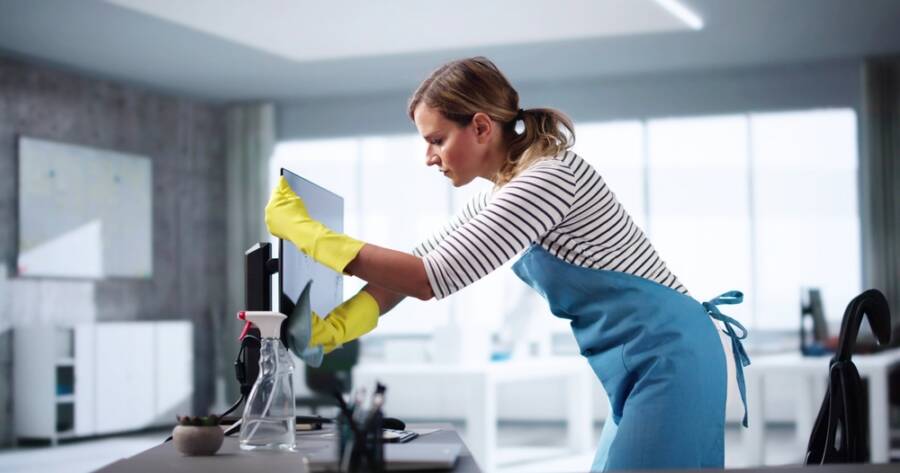
A clean office environment does more than create a good first impression — it actively supports employee health, meets professional standards, and reflects the overall quality of a business. Understanding how commercial office cleaning works helps facilities make smarter decisions about sanitation and building upkeep.
What Commercial Office Cleaning Actually Covers
Commercial office cleaning is a broad category of professional services designed to maintain the cleanliness, hygiene, and appearance of workplace environments. Unlike residential cleaning, commercial cleaning must address the demands of high-traffic spaces where dozens or hundreds of people interact with shared surfaces every day. This includes everything from lobby reception areas and conference rooms to restrooms, break rooms, open workstations, and shared hallways.
Routine cleaning tasks typically include vacuuming and mopping floors, emptying waste receptacles, wiping down surfaces, sanitizing restrooms, and restocking supplies. However, a thorough commercial cleaning program goes well beyond these basics. It incorporates deliberate attention to the surfaces that employees and visitors touch most frequently throughout the day.
Why High-Touch Surfaces Require Special Attention
Not every surface in an office carries the same level of germ exposure. Certain areas accumulate significantly more contact — and therefore more contamination — than others. Doorknobs, elevator buttons, stair railings, countertops, shared pens, desk surfaces, restroom fixtures, and touchpad devices all fall into this high-touch category. Regular cleaning of these specific surfaces plays an important role in reducing infection risk throughout a facility (source).
When a cleaning team prioritizes these high-contact zones, it addresses the most common pathways through which germs travel in shared workplaces. A desk that appears tidy may still harbor bacteria on its surface. A door handle that looks clean can still transfer pathogens from one employee to the next. This is why visual cleanliness alone is not a reliable measure of whether a workspace is actually hygienic.
Cleaning vs. Sanitizing vs. Disinfecting
One of the most misunderstood aspects of office cleaning is the distinction between cleaning, sanitizing, and disinfecting. These terms are often used interchangeably, but they represent different processes with different outcomes. Cleaning with commercial products that contain soap or detergent reduces the number of germs present on surfaces and lowers the overall infection risk in a facility (source). However, cleaning alone does not eliminate pathogens entirely.
Sanitizing reduces microbial levels to a degree considered safe by public health standards, while disinfecting uses stronger chemical agents to destroy a broader range of bacteria and viruses. Importantly, cleaning must always precede sanitizing or disinfecting. Surface impurities such as dirt, oil, or organic matter can interfere with the effectiveness of sanitizing and disinfecting chemicals, making the surface preparation step essential rather than optional (source).
Facilities that experience visible illness outbreaks or operate in industries with elevated hygiene standards should also consider targeted disinfection of areas where sick individuals have been present. In some cases, local health authorities may recommend specific disinfection procedures during active disease outbreaks (source).
Measuring and Verifying Cleanliness Standards
Modern commercial cleaning has moved beyond subjective assessments. Industry organizations have developed science-based frameworks that allow facilities to objectively measure the effectiveness of their cleaning programs. The ISSA Clean Standard for Institutional and Commercial Facilities applies to office buildings, retail stores, hotels, and similar environments, offering a structured way to evaluate how well cleaning efforts are actually working (source).
At the core of this standard is the use of ATP meters — devices that detect adenosine triphosphate, a molecule present in biological matter — alongside traditional visual audits. ATP meter testing provides measurable data about surface contamination levels that a visual inspection simply cannot capture. Research supporting this approach found that reductions in ATP levels consistently corresponded with reductions in bacterial presence, supporting the conclusion that lower ATP readings reflect both cleaner and healthier surfaces (source).
This “Clean, Measure, Monitor” philosophy represents a significant evolution in how commercial facilities approach building maintenance (source). Rather than relying on the assumption that a cleaned surface is a safe one, facilities using measurable standards can verify outcomes and make adjustments based on actual data.
Building a Comprehensive Office Cleaning Program
An effective commercial cleaning program requires more than a checklist. It demands a consistent schedule, appropriate products for each surface type, trained personnel, and a system for escalating cleaning intensity when circumstances call for it. Offices with heavy foot traffic need more frequent attention to common areas than smaller, lower-traffic workplaces. Similarly, facilities that serve clients or the public face higher expectations for visible and measurable cleanliness than those operating in purely internal environments.
Cleaning frequency should align with actual usage patterns. Restrooms in a busy office building may need multiple cleanings per day, while storage areas or private offices may require less attention. Break rooms and kitchen areas deserve special consideration, as food preparation and consumption create both hygiene challenges and potential contamination risks that differ from general office cleaning needs.
Selecting commercial cleaning products also matters. Not all cleaners are appropriate for all surfaces, and misuse of disinfectants or sanitizers can damage materials or leave chemical residue that poses its own risks to building occupants. Professional cleaning services are trained to match the right products to each surface and situation, a detail that self-managed cleaning programs sometimes overlook.
Why Consistent Maintenance Supports a Healthier Workplace
The relationship between a clean facility and the health of its occupants is well established. Employees who work in regularly cleaned, well-maintained environments tend to experience fewer illness-related absences, and a hygienic workspace contributes to overall morale and professional satisfaction. For businesses, this translates into real operational benefits beyond the simple appearance of a tidy office.
Consistent building maintenance also extends the life of office assets. Carpets that are cleaned on a regular schedule last longer than those that receive only occasional attention. Hard flooring, furniture, and fixtures all benefit from proper and frequent care. In this way, commercial cleaning is not just a sanitation service — it is also a long-term investment in the physical infrastructure of a workplace.
Why You Should Learn More About Commercial Office Cleaning
Commercial office cleaning encompasses a wide range of services and standards that directly affect both employee health and the professional standing of a business. From daily maintenance of high-touch surfaces to science-backed verification methods and the important distinctions between cleaning, sanitizing, and disinfecting, a well-designed office cleaning program makes a measurable difference.
Facilities that take cleaning seriously — using trained professionals, appropriate products, and verifiable standards — consistently maintain safer, healthier, and more productive work environments. For any business evaluating its current approach to sanitation and building upkeep, a deeper understanding of commercial cleaning best practices offers a clear path forward.